



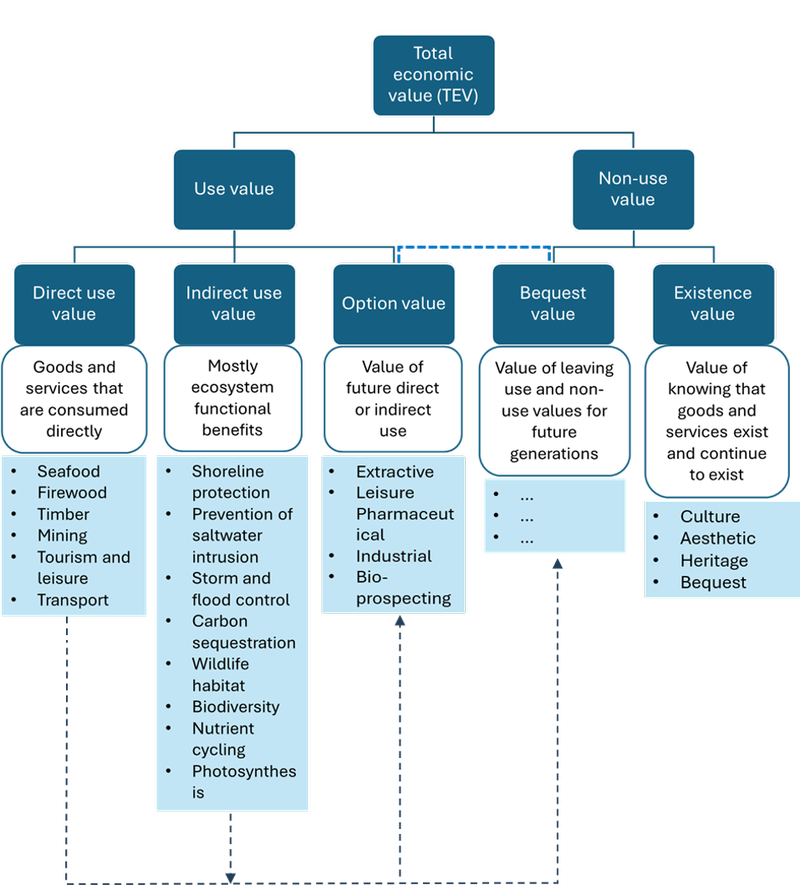
To measure the value of ecosystems, we often use the concept of Total Economic Value (TEV), which includes both use values and non-use values. Use values come from the direct or indirect use of ecosystems. Direct use refers to benefits people get by directly using ecosystem resources—like catching fish, collecting seaweed, or swimming at the beach. Indirect use refers to benefits that come from ecosystem functions that support life and livelihoods, such as mangroves reducing coastal erosion or coral reefs supporting fish populations. Non-use values reflect the importance people place on simply knowing that marine and coastal ecosystems exist, will be preserved for future generations, or have cultural and spiritual significance—even if they are not directly used.
Figure1: The total economic value of marine and coastal ecosystem services benefits
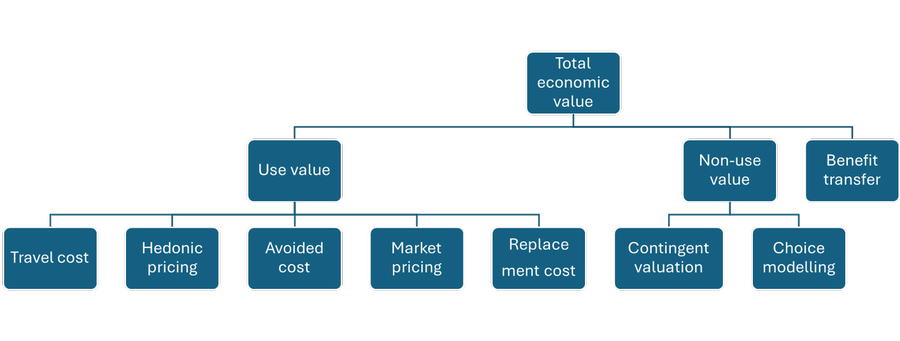
To estimate these values, we apply a combination of methods, including market data, surveys, and modelling tools from non-market valuation. Non-market valuation methods, such as willingness to pay methods, are used to estimate benefits that are not traded in markets or do not have market value to estimate the economic worth of ecosystem services benefits.
Figure2: Methods for monetising environmental goods and services
- What are Ecosystem Goods and Services?
- Why Estimate the Monetary Value of Ecosystems?
- Monetary Estimates of Ecosystem Services in Pacific Island Countries
- Why Are Some Ecosystem Service Benefits Valued and Others Not?
- How Do We Measure Ecosystem Values?
- Why Does Ecosystem Valuation Vary So Much?
- Does It Really Add Up to Estimate Total Economic Value?
- How does ecosystem valuation relate to Environmental Accounting?